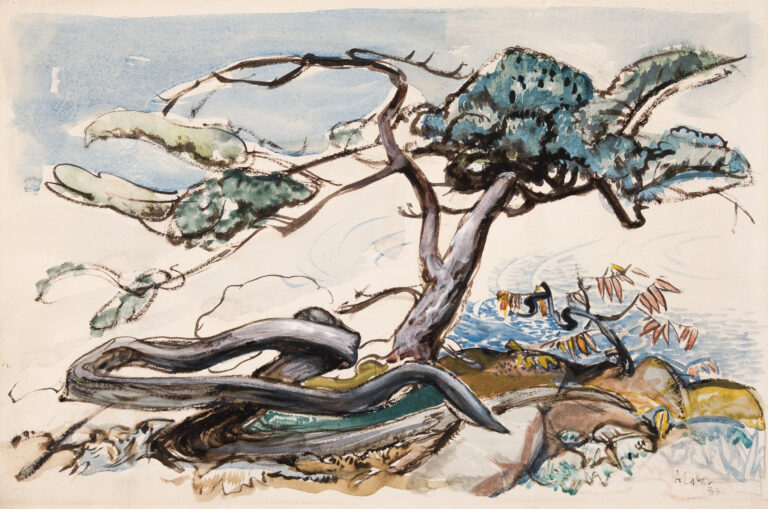
Sir Frederick Grant Banting, MALIGNE LAKE, CANADIAN ROCKIES; 1936
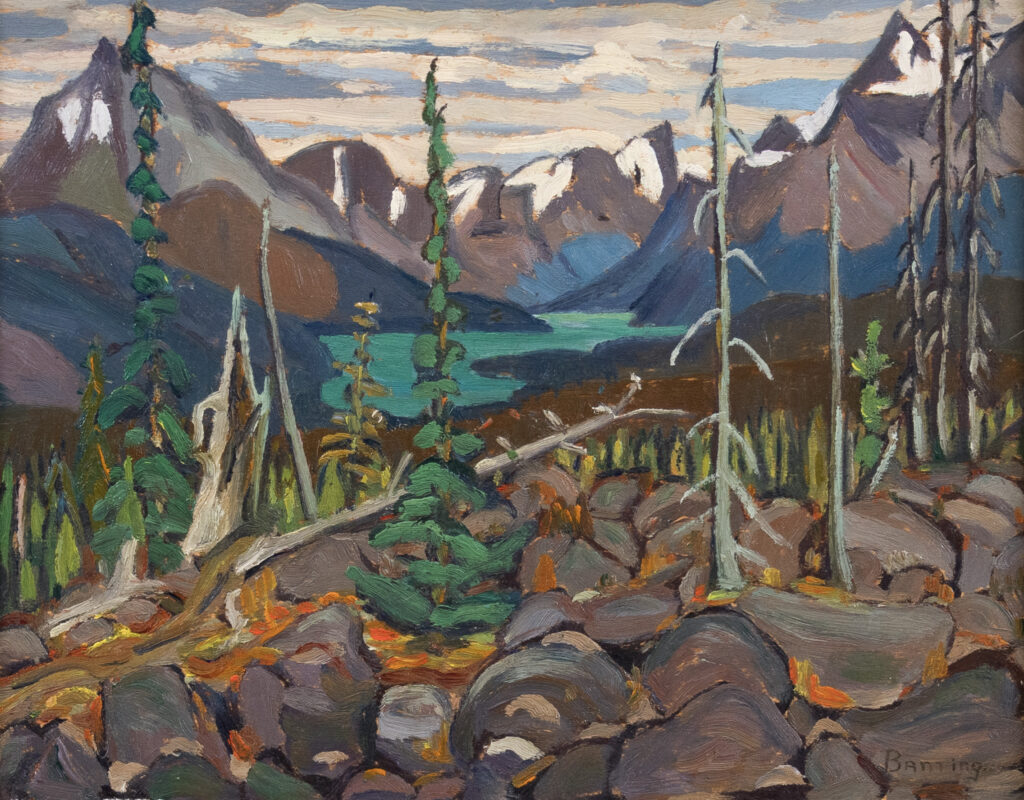
Sir Frederick Grant Banting
Canadian [1891-1941]
MALIGNE LAKE, CANADIAN ROCKIES; 1936
oil on wood panel
10.5 x 13.5 in. (26.7 x 34.3 cm)
signed lower right; inscribed verso “26094”, “164” and “Mrs. Banting / 205 Rosedale Heights Dr.”
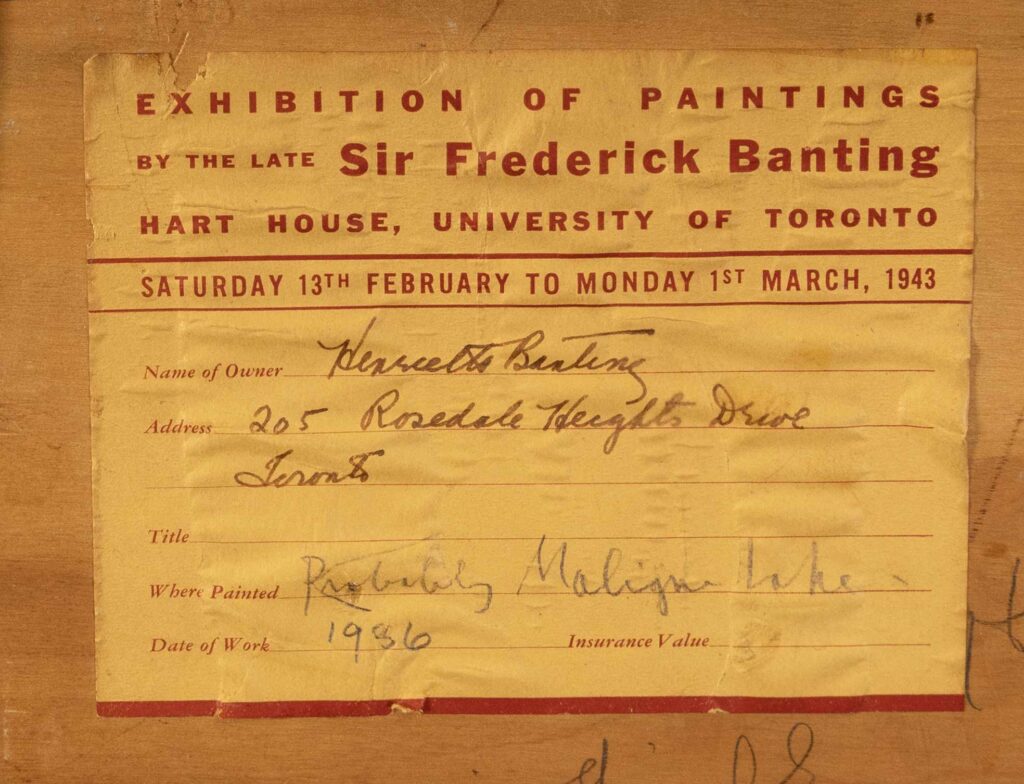
Exhibited: “Exhibition of Paintings by the Late Sir Frederick Banting”, Hart House, University of Toronto, February 13 to March 1, 1943 (label verso)
Catalogue entry label verso reads: “No. 4 / MALIGNE LAKE – CANADIAN ROCKIES / 1936 / Henrietta Banting, Toronto, Ont.”
Provenance: Lady Henrietta Banting, Toronto ON; Private Collection, Calgary AB
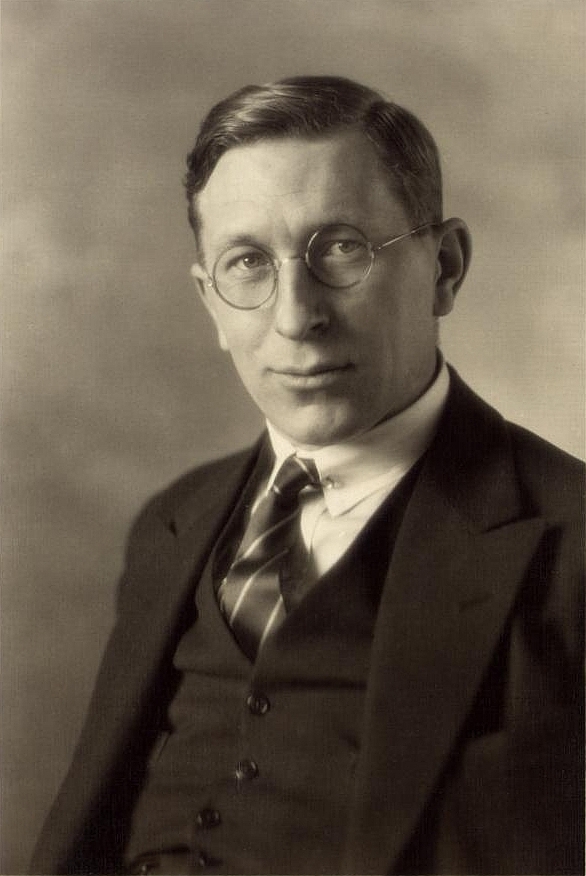
Frederick Banting was the youngest of six children born to William Thompson and Margaret Grant Banting, born on the family farm in Essa Township near Alliston, Ontario. It is surprising given his future achievements that Banting was described as an unremarkable, shy, but conscientious student, though he had varied interests that included athletics and art. Today, he is globally recognized for his lifetime achievements: most notably his 1921 discovery of insulin with Charles Best. He received the 1923 Nobel prize in Medicine with John Macleod, and a knighthood in 1934 for his remarkable contributions to medicine.
During his scientific career, Banting also became a respected artist, closely associated with A.Y. Jackson and the Group of Seven. As a young man, he enjoyed sketching nature and drew pen and ink cartoons. He took up painting more seriously in 1920 while struggling to establish a medical practice in London, Ontario, and it became an important means of relaxation for him as his career progressed.
In 1925, Banting joined the Arts and Letters Club of Toronto, and around the same time, first met A.Y. Jackson. Through Jackson and the club, Banting became aware of the work of the founding members of the Group of Seven and their philosophies about Canadian art. Jackson and Banting soon forged a strong friendship, and they were regular sketching partners for 16 years, travelling across Canada to paint the varied landscape together.
It was at the Arts and Letters Club that Banting was also introduced to images and tales of the western Rocky Mountains, prompting his first trip there in 1925. A few years later in 1928, Banting and Jackson headed West to sketch the Rockies for the first time together. Banting would show Jackson his sketches for feedback and invested significant time and effort into advancing his painting skills. Over time, he developed his own style, more controlled, contemplative of form, colour and representation.
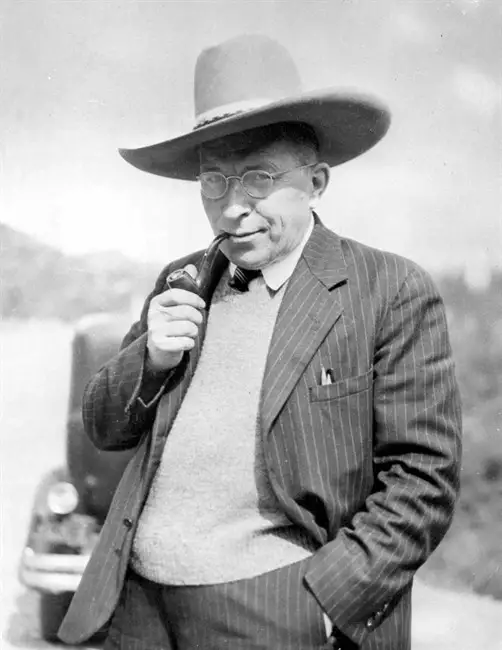
In June 1936, Banting returned to Jasper en-route to the annual Canadian Medical Association convention in Victoria. He was the very first guest for the opening of the season at Jasper Park Lodge on June 15th: “I just bummed around there and loafed and painted,” he told reporters at the convention, “I had intended on going south after the convention, but I was so charmed with the place that I have decided to spend another few days in Jasper on my return.” True to his word, he did return and spent three additional weeks in Jasper to devote his time entirely to sketching. Most of Banting’s surviving Jasper sketches are attributed to this trip.
The vantage point of “Maligne Lake, Canadian Rockies” is likely from the area of the Bald Hills in Jasper National Park. Today, the challenging route through Bald Hills passes through a forest of lodgepole pine to treeline, where summits and ridgelines connect through alpine meadows, allowing one to wander and take in the everchanging views of Maligne Lake and the surrounding peaks.
“I have never found myself in such surrounding anywhere else,” he stated upon returning from this 1936 trip, “No matter where you look, you find something majestic, dignified, and awe-inspiring. To me it is one of the most beautiful settings in the world.”
View it here in our Spring 2026 Fine Art auction.
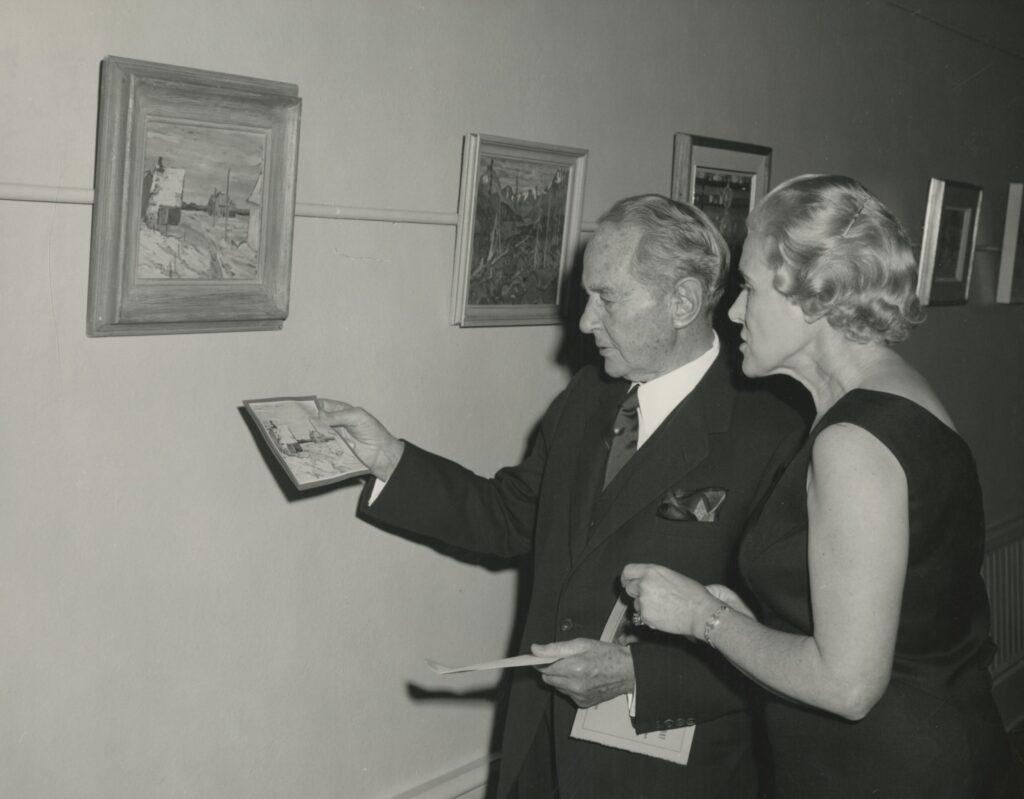
Lady Henrietta Banting at the Hart House Exhibition of paintings by Sir Frederick Banting, 1943. MALIGNE LAKE, CANADIAN ROCKIES can be found as the second painting from the left.