William Armstrong
View our results from 2005 – Present.

View our results from 2005 – Present.
Canadian [1822-1914]
Royal Canadian Academy
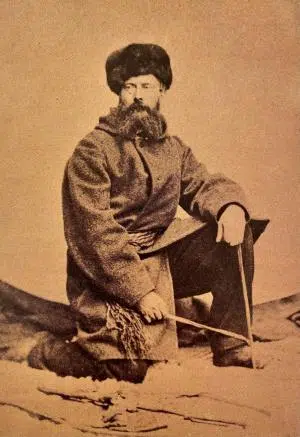
William Armstrong, the son of a Royal Irish Artillery officer, studied art in Dublin, and apprenticed as an engineer on the Irish and English railways. In the 1850s he was both a civil engineer, and a drawing master at the Toronto Normal School in Toronto ON. He regularly exhibited at The Ontario Society of Artists and The Royal Canadian Academy. The artist sold sketches of Canada’s first nations peoples to the Prince of Wales and the Duke of Newcastle. While working as a railway engineer, he painted scenes of Manitoulin Indians, Lake Superior, Fort William, Plains and Foothills Indians.
In 1870, William Armstrong accompanied the Wolseley Expedition to the Red River Colony, recording the incredible effort required to move the military force through the Canadian wilderness. Armstrong's painting, Red River Expedition, Purgatory Landing was reproduced as a wood engraving on the cover of the Canadian Illustrated News on July 9, 1870 to accompany their coverage of the expedition's progress. Armstrong won numerous prizes at provincial exhibitions, and his work was displayed at the 1855 Exposition Universelle in Paris, and at the Dublin International Exhibition in 1865. He exhibited with the Ontario Society of Artists and was a member of the Royal Canadian Academy of Arts until 1887, when he resigned. In 1864 Armstrong began to teach drawing at the Toronto Normal School and then taught at the University of Toronto from 1872 to 1877. Following his retirement, Armstrong continued teaching art from his home until his death in 1914. He is celebrated as one of Canada's early explorer-artists.


